Many ERP failures happen before go-live because requirements, data, testing, training and ownership are not handled properly.
Plan Implementation Properly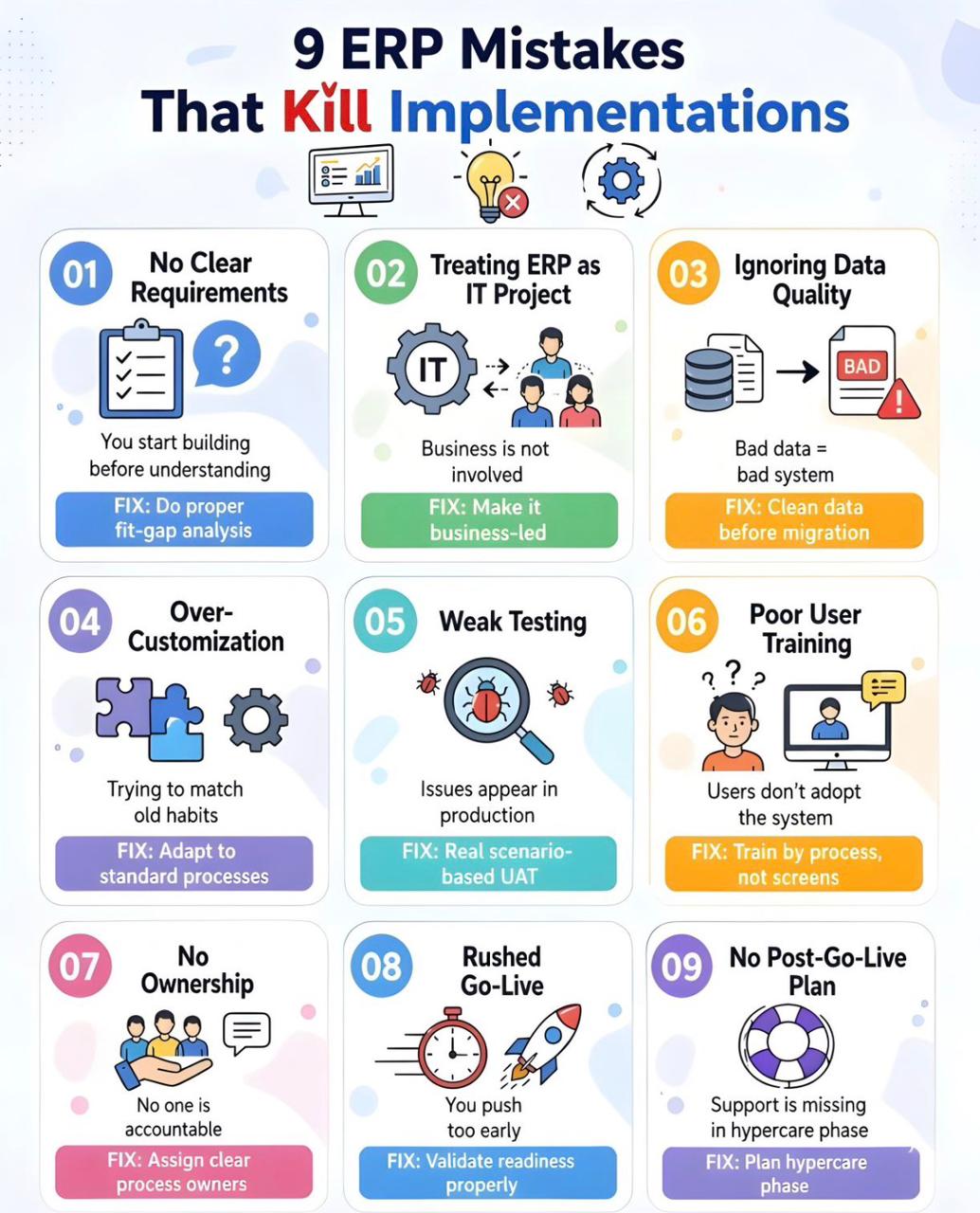
Successful ERP implementation needs business ownership, clean data, realistic scope, user training, real scenario testing and a support plan after go-live.
Define requirements through business process study and fit-gap analysis before product configuration.
ERP must be business-led with process owners involved from selection to testing.
Bad master data leads to bad system output. Clean data before migration.
Trying to copy every old habit increases cost, delay and future upgrade difficulty.
Test real scenarios including approvals, reports, tax, inventory, billing and exceptions.
Train users by process and responsibility, not just screen-wise button clicking.
Assign process owners for data, approvals, testing, decisions and sign-offs.
Validate readiness, user confidence, data migration and support before final rollout.
Plan post-go-live support for issue handling, training gaps and process corrections.
MINT ERP can help prepare requirement mapping, implementation checklist, data plan, UAT and go-live roadmap.